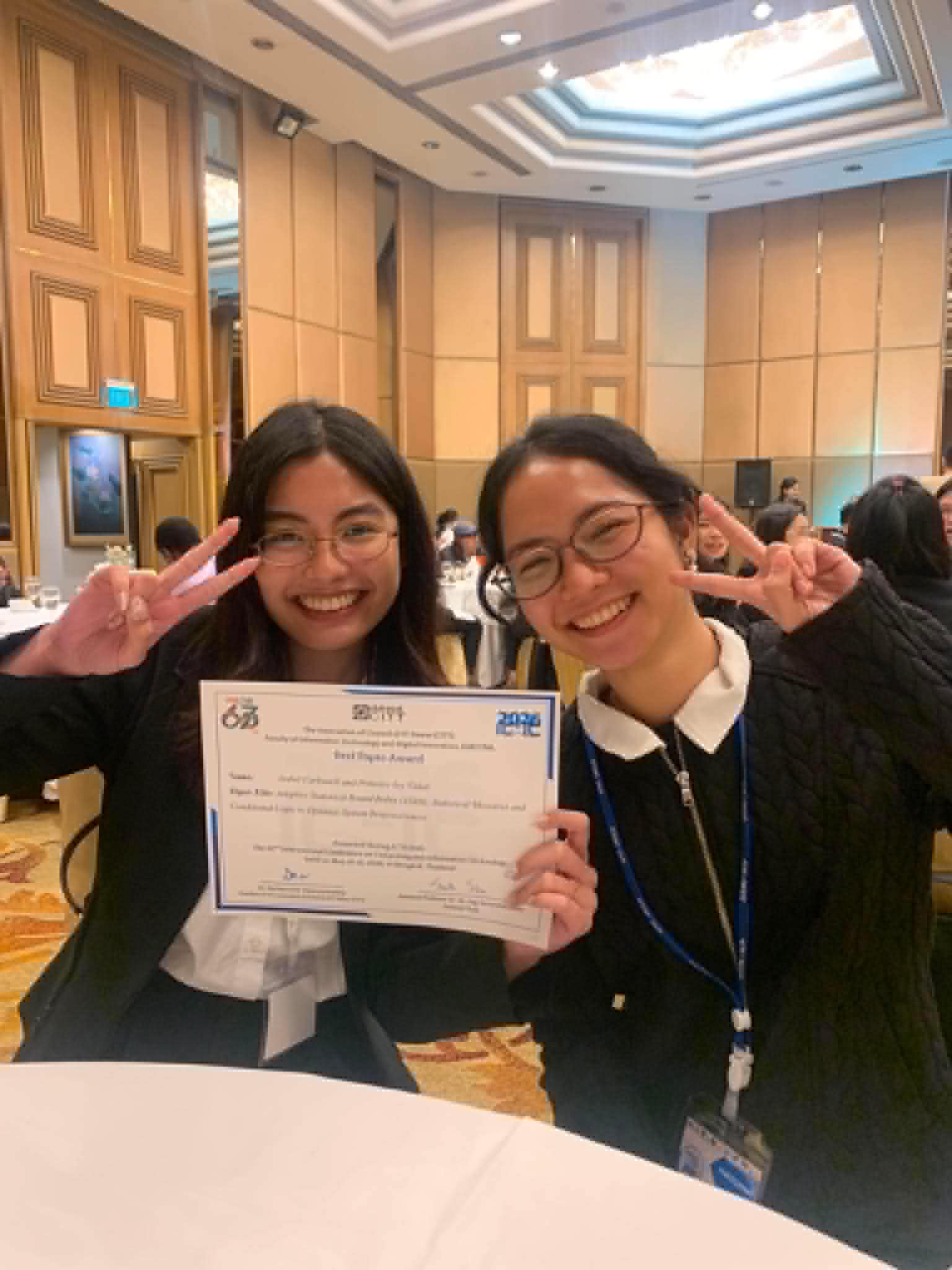
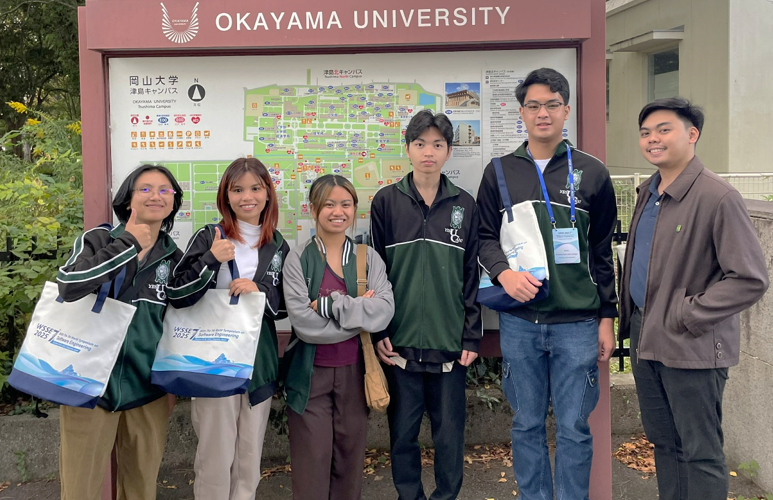
Computer Science students from the College of Information Technology and Computer Science (CITCS), together with their adviser, were invited to present their research papers at the 7th World Symposium on Software Engineering, held on October 24–26, 2025 at Okayama University, Okayama, Japan.
Participating Students
The student presenters were:
Althea Aquilino, Rjanna Miki Balaybay, Micah Angela Cagas, Marga Chawag, John Reniel Cruz, Khenjie Cruz, Francis Carlo Del Campo, Jenny Ann Guyong, Harlene Luy Fook, Justine Mae Macario, JC Aushley Villanueva, and Lady Venice Villanueva.
The group was guided by their adviser, Mr. Efraim Jededia Z. Pangan.
The research papers presented at the international symposium served as the final academic requirement for their Software Engineering course, demonstrating the students’ ability to conduct scholarly research and contribute to global discussions in the field of software engineering.
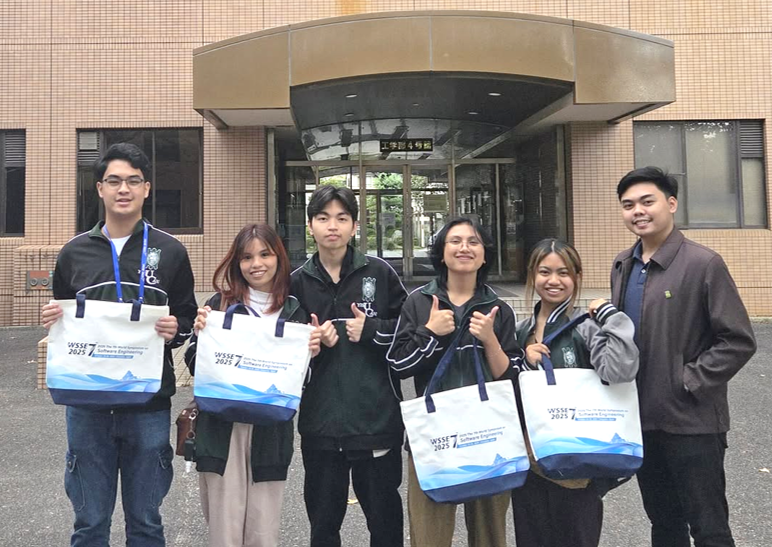
Conference Highlights
Day 1: Registration
The first day focused on conference registration and the collection of presentation materials, allowing participants to prepare for the succeeding sessions.
Day 2: Onsite Presentations
The second day began with opening remarks and a welcome address from the organizing committee. The morning session featured keynote and invited speeches centered on recent advancements in software development.
In the afternoon, onsite oral presentations were conducted and divided into thematic sessions.
Session 1: Intelligent Software Design and Development
This session was chaired by Dr. Shin-Jie Lee, Professor at National Cheng Kung University.
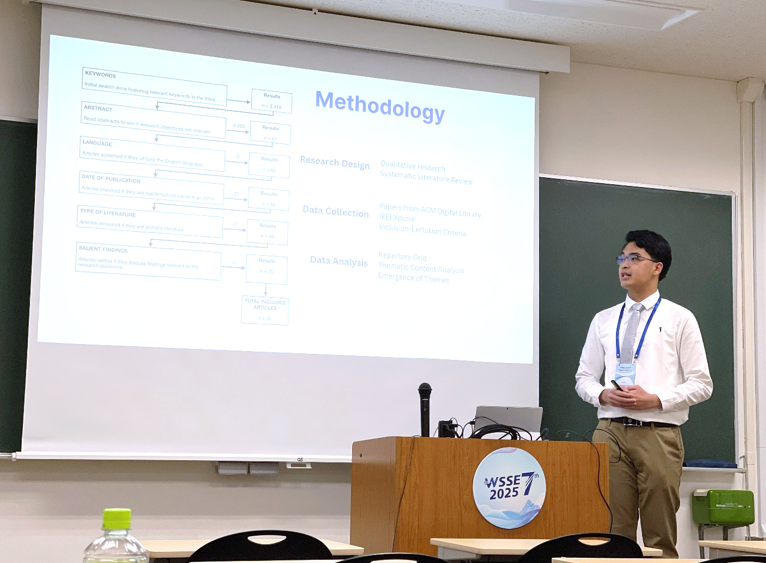
Mr. Francis Carlo Del Campo presented the paper titled “Scrum for Safety-Critical Software Development: Understanding the Applications of an Agile Methodology in Rigid Development Environments.” The study was a systematic literature review that examined the applicability of Scrum in safety-critical software systems.
Session 2: LLM-assisted Computer Programming Language and Application Development
Chaired by Dr. James J. Lee of Seattle University, Session 2 began at 1:30 PM.
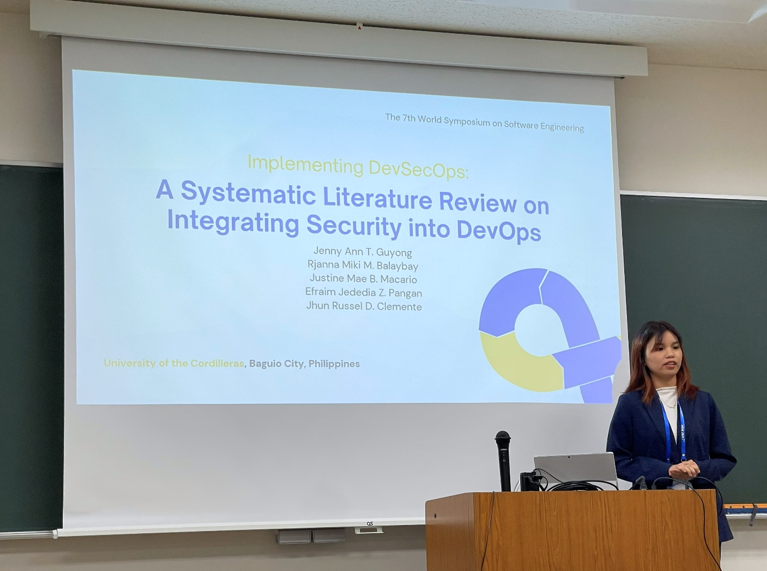
Ms. Jenny Ann Guyong presented “Implementing DevSecOps: A Systematic Literature Review on Integrating Security into DevOps,” which focused on incorporating security practices within DevOps methodologies.
The day concluded with a dinner for onsite presenters as a gesture of appreciation from the conference organizers.
Day 3: Online Presentations
The final day of the conference was dedicated to online presentations conducted via Zoom. Two students participated in Session 7, chaired by Dr. Patricia Brockmann of the Nuremberg Institute of Technology.
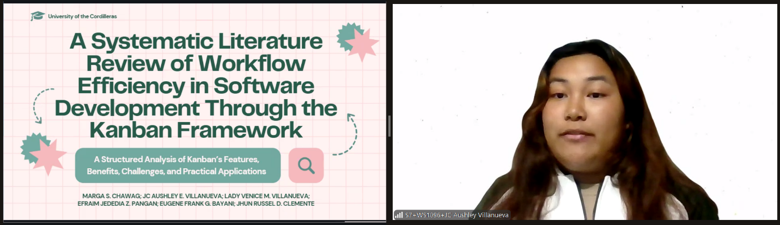
Ms. JC Aushley Villanueva presented “A Systematic Literature Review of Workflow Efficiency in Software Development Through the Kanban Framework,” which evaluated recent studies on Kanban’s role in improving workflow efficiency.
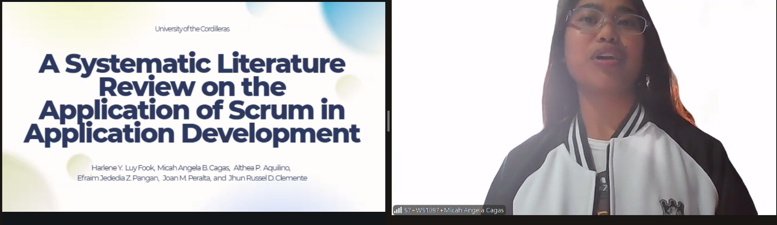
Ms. Micah Angela Cagas followed with “A Systematic Literature Review on the Application of Scrum in Application Development,” reviewing Scrum’s implementation across various application development contexts.
The conference formally concluded with closing remarks delivered by Dr. Patricia Brockmann after all online presentations were completed.
Empowering Students Through International Research Engagement
Whether through participation in international research conferences, the goal is to provide meaningful learning experiences that empower students through engagement, creativity, and the practical application of technical and analytical skills. Activities such as conducting systematic literature reviews, preparing research papers, and presenting findings on a global platform allowed students to navigate research methodologies, academic writing, and scholarly presentation in real-world contexts, fostering problem-solving, critical thinking, and innovation. Guided mentorship and a strong foundation in software engineering principles were central, while hands-on practice enhanced confidence and professional competence. By emphasizing experiential learning through this achievement, UC CITCS prepares students to become professionals capable of contributing to research, innovation, and global scholarly discourse in software engineering.
SDG Alignment
This activity supports Sustainable Development Goal (SDG) 4: Quality Education, particularly Target 4.3, which aims to ensure equal access to affordable and quality technical, vocational, and tertiary education. By engaging students in international research presentation and scholarly exchange, the activity contributes to Indicator 4.3.1, which measures participation rates in formal and non-formal education and training in tertiary education contexts.
The activity also aligns with SDG 9: Industry, Innovation, and Infrastructure, specifically Target 9.5, which seeks to enhance scientific research and upgrade the technological capabilities of industrial sectors. The students’ research outputs in software engineering contribute to Indicator 9.5.2, which tracks the number of researchers per million inhabitants, as the activity promotes student involvement in research and innovation processes within higher education institutions.
Furthermore, this initiative supports SDG 17: Partnerships for the Goals, particularly Target 17.16, which emphasizes enhancing global partnerships for sustainable development. The participation in an international academic conference contributes to Indicator 17.16.1, which measures the number of countries engaged in multi-stakeholder development cooperation, reflected through international academic collaboration and knowledge exchange among global institutions.