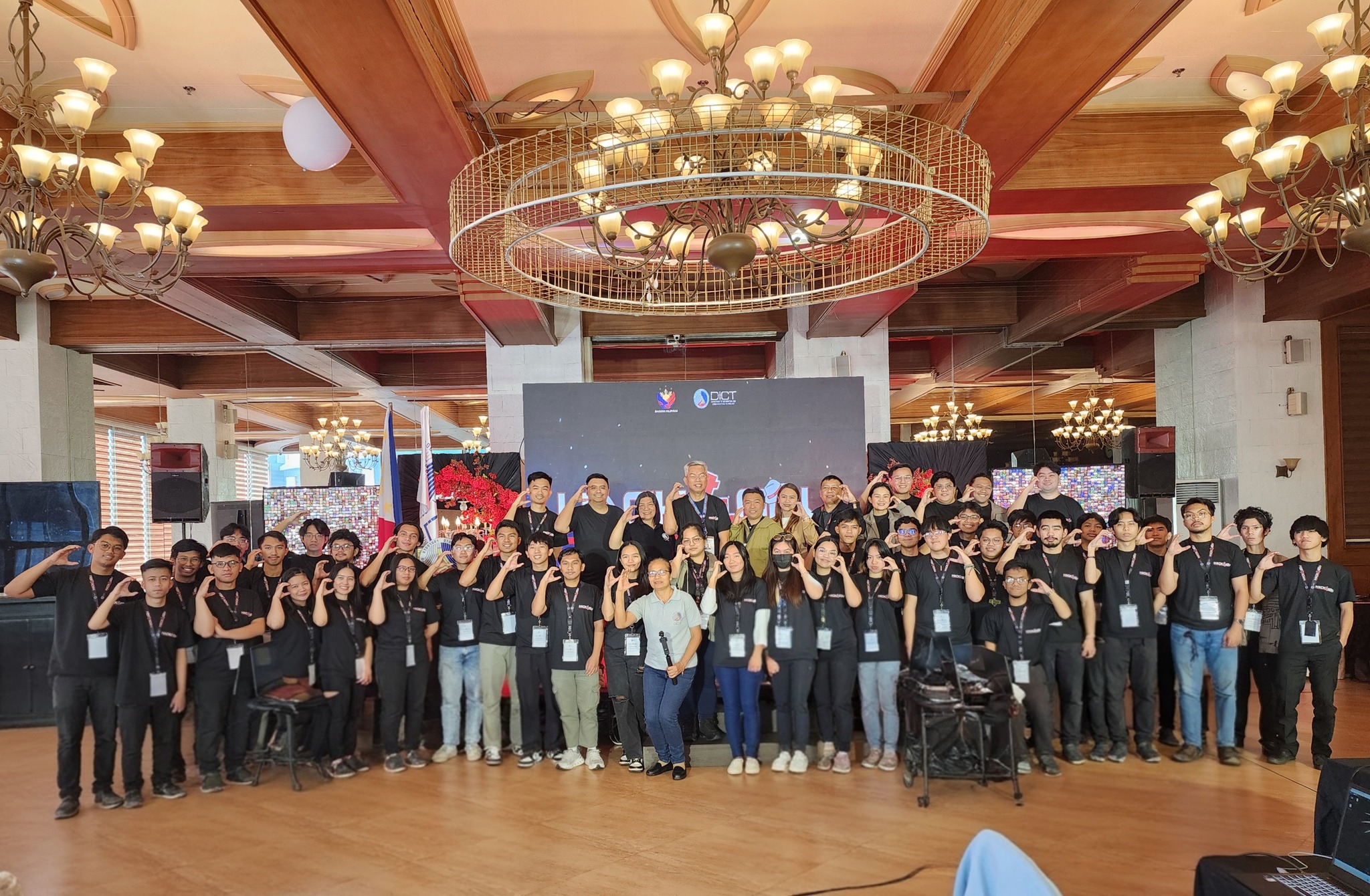
Baguio City, Philippines – October 4, 2025 — The University of the Cordilleras – College of Information Technology and Computer Science (UC CITCS) showcased cybersecurity excellence as its students claimed top honors at the Hack4Gov 2025 Regional Qualifiers, held on October 2, 2025, at Paragon Hotel, Baguio City.
Team UC_Expl01ts Claims Championship Title
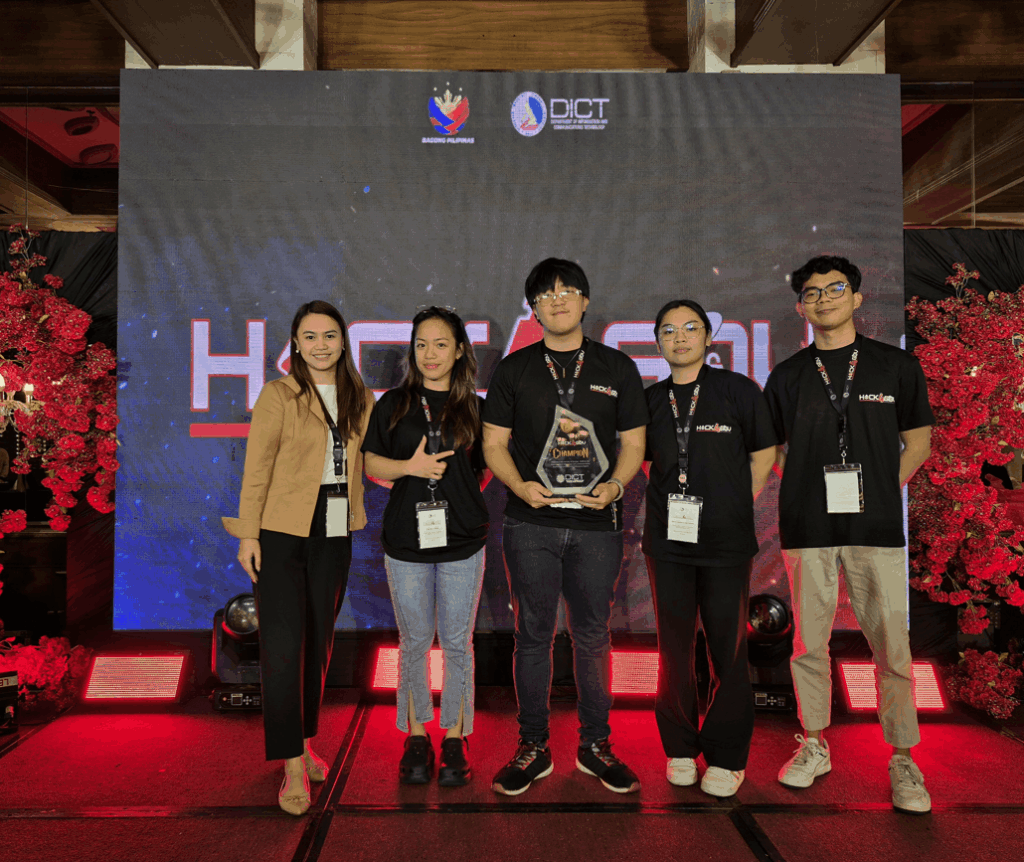
Leading the charge, Team UC_Expl01ts emerged as the champion after excelling in advanced cybersecurity challenges focused on network defense, ethical hacking, and problem-solving. The winning team is composed of Waincel Lance C. Dumanghi, Kaila Mae E. Bistid, Rykiel Louizze D. Dela Calzada, and Timothy Eli C. Cada, under the mentorship of Coach Arnemie D. Gayyed (In photo: 1st from the left).
Strong Overall Performance by CITCS Delegates
Further demonstrating CITCS’s dominance in the field, two additional UC teams ranked among the top five:
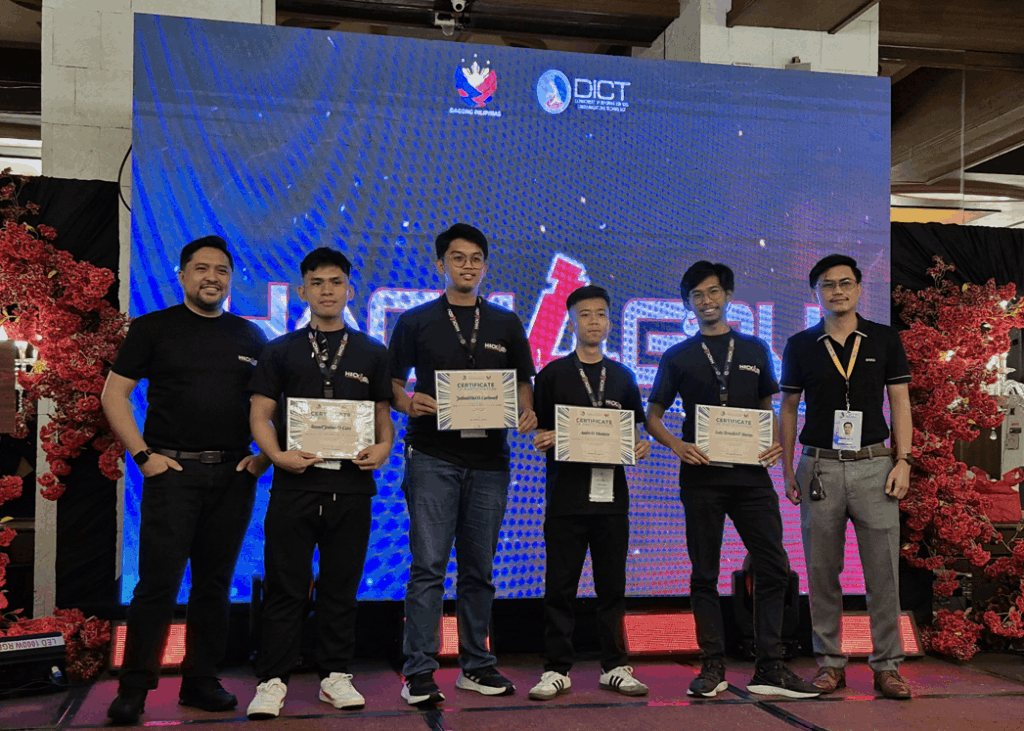
- Team UCrypted – 4th Place
Members: Audre D. Montero, Luke Benedict P. Borras, Jathniel Rei D. Carbonell, and Ramel Joshua O. Cave
- Team UC (5th Place)
Members: Clyde Wyndel F. Salvador, Clarence Oliver D. Alvarado, Corlis F. Sagampud, and Daryl D. Valenzuela
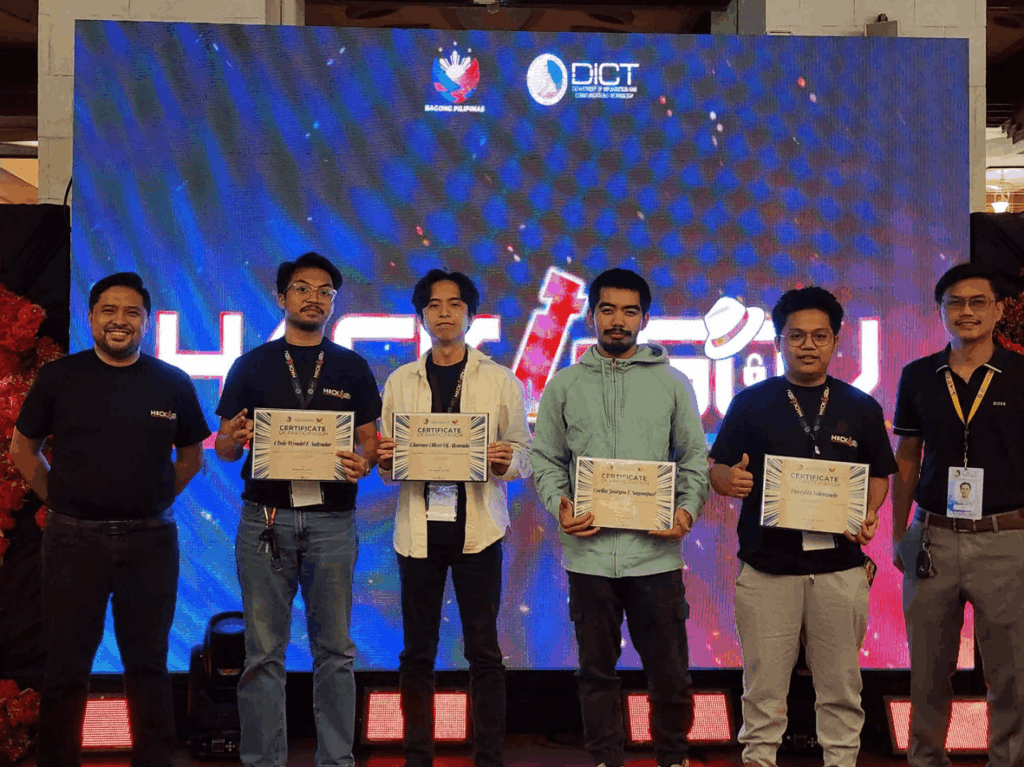
The BS Information Technology and BS Computer Science students from UC CITCS will represent the Cordillera Administrative Region at the Hack4Gov 2025 National Finals after being hailed champions in the competition’s Regional Qualifiers.
In preparation for the national stage, the team will undergo intensive trainings, practice sessions, and coaching with experts from the Department of Information and Communications Technology – CAR, sharpening their skills and strategies for the upcoming challenge.
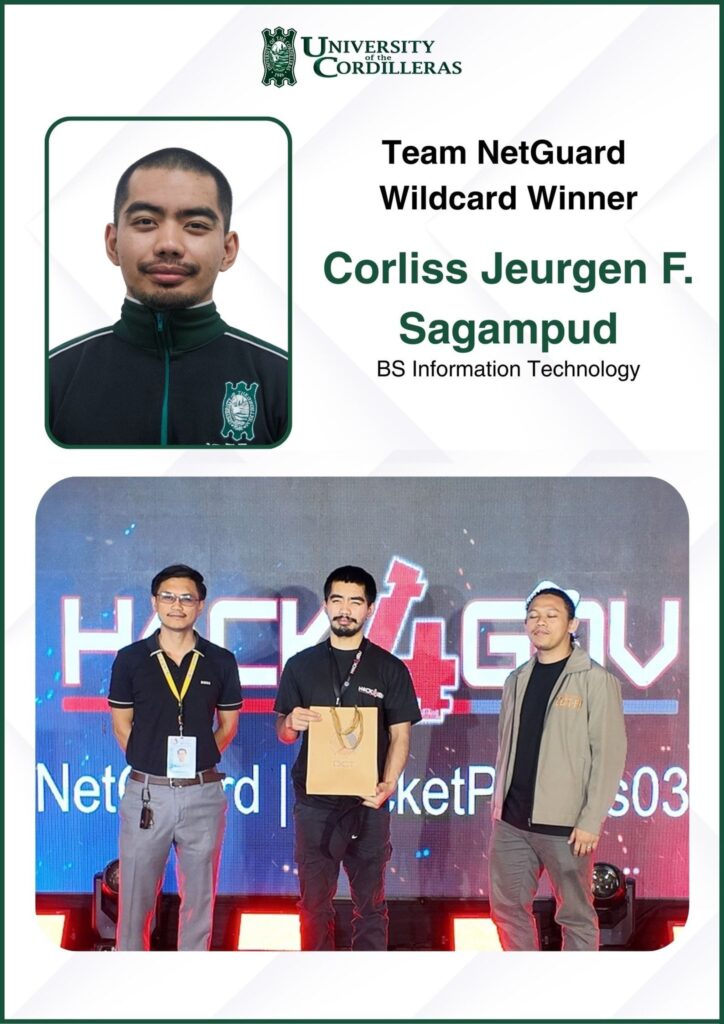
Joining the UC delegates is Corliss Jeurgen F. Sagampud, who earned the highest score in his team. He will also compete in the national finals.
About Hack4Gov 2025
Organized by the National Computer Emergency Response Team (NCERT) of the Cybersecurity Bureau, Hack4Gov 2025 brought together nine teams from top higher education institutions in the Cordillera Administrative Region. Participating schools included STI College Baguio, University of Baguio, Saint Louis University, and the University of the Cordilleras, with the University of Abra and Benguet State University joining as observers.
With the theme “Cyber Guardians: Empowering Today’s Defenders, Securing Tomorrow’s Nation,” the event aimed to equip students with practical experience in digital forensics, cyber threat analysis, and defensive security strategies.
Championing Excellence in Cybersecurity Education
The remarkable performance of UC CITCS teams reflects the college’s strong commitment to information security education and its mission to develop industry-ready cybersecurity professionals who contribute to safeguarding the nation’s digital landscape.
Whether through classroom instruction or competitive, technology-driven platforms such as Hack4Gov, the goal remains the same, to create meaningful learning experiences that empower students through engagement, skill development, and continuous improvement. Cybersecurity competitions are not merely contests; they are learning environments where theory meets practice, allowing students to apply knowledge responsibly and ethically. Mentorship, discipline, and a strong academic foundation remain central, while technology serves as a catalyst that sharpens competence and confidence. When institutions and educators continuously invest in professional growth and experiential learning, technology becomes a tool that elevates both the college and its students, producing future-ready professionals rather than passive consumers of innovation.
SDG Alignment
This activity supports Sustainable Development Goal (SDG) 4: Quality Education, particularly Target 4.4, which focuses on strengthening technical and professional skills needed for employment and lifelong learning. Participation in the Hack4Gov 2025 Regional Qualifiers provided students with an applied learning environment that emphasized analytical thinking, technical proficiency, and collaborative problem-solving in a high-demand field.
The activity contributes to Indicator 4.4.1, which tracks the development of information and communications technology (ICT) skills among youth and adults. Through structured challenges and guided mentorship, students enhanced their readiness for technology-driven careers, reinforcing the role of higher education institutions in delivering relevant, skills-oriented learning experiences that respond to evolving industry needs.