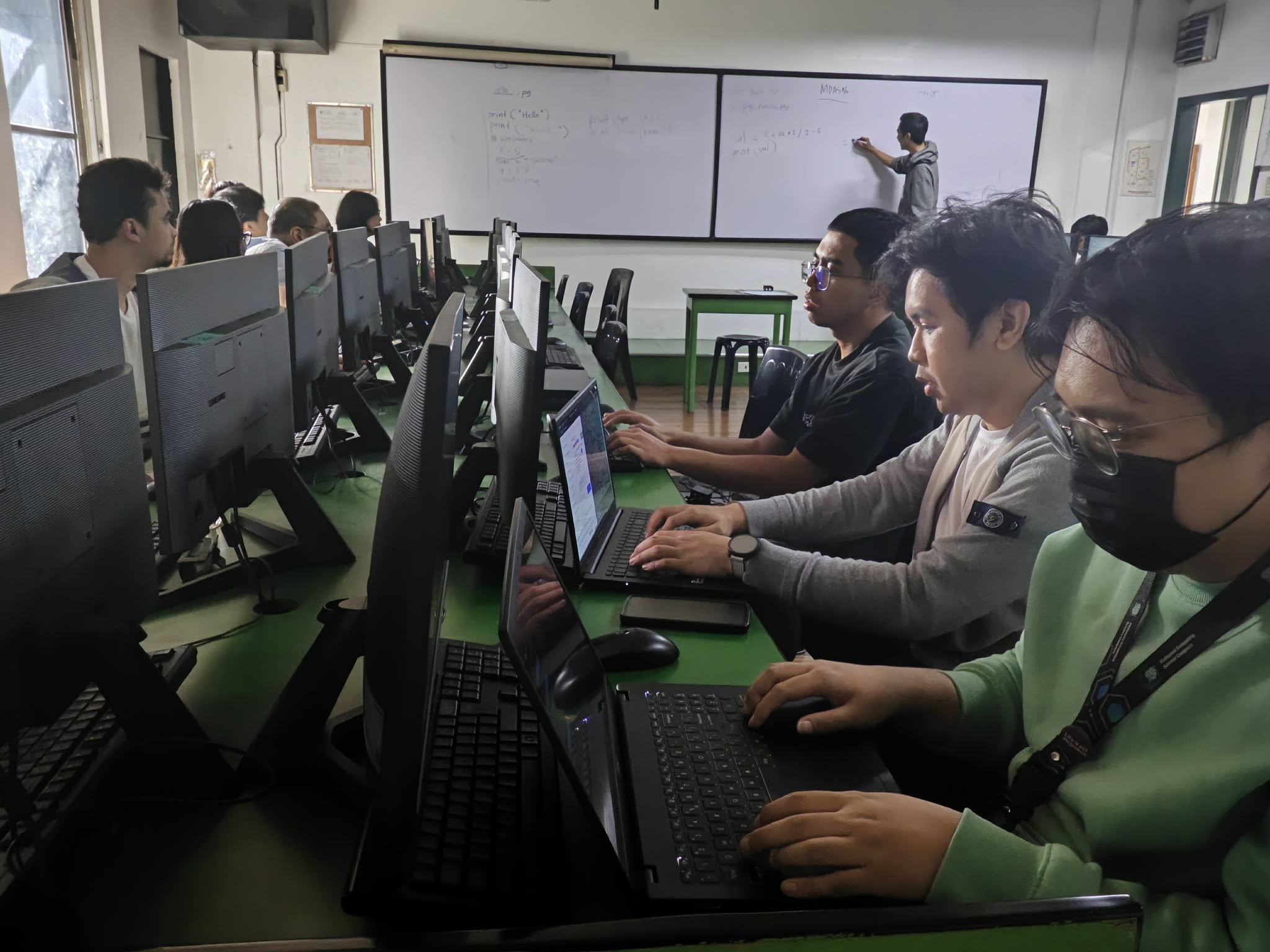
Baguio City, Philippines – January 30, 2026 – The University of the Cordilleras (UC), through the College of Information Technology and Computer Science (CITCS), conducted a Workshop on Introduction to Python for faculty members as part of its ongoing initiatives to enhance instructional capacity and strengthen the integration of emerging technologies in academic programs.
The workshop aimed to provide faculty members with foundational knowledge and practical skills in Python programming, a widely used and versatile programming language applicable across various courses offered by the department. The activity sought to support faculty readiness in incorporating Python-based concepts, exercises, and applications into their respective subjects, thereby ensuring curriculum relevance and alignment with current technological trends.
The workshop was facilitated by Mr. Leonard Prim Reyes, Ms. Anna Rhodora Quitaleg, Mr. Venn Edward Nicolas, and Mr. Ibrahim Hanbal, who delivered structured discussions, demonstrations, and guided hands-on exercises. Topics covered included Python syntax, data types, control structures, functions, and basic program development. The facilitators emphasized practical applications to support effective classroom integration.
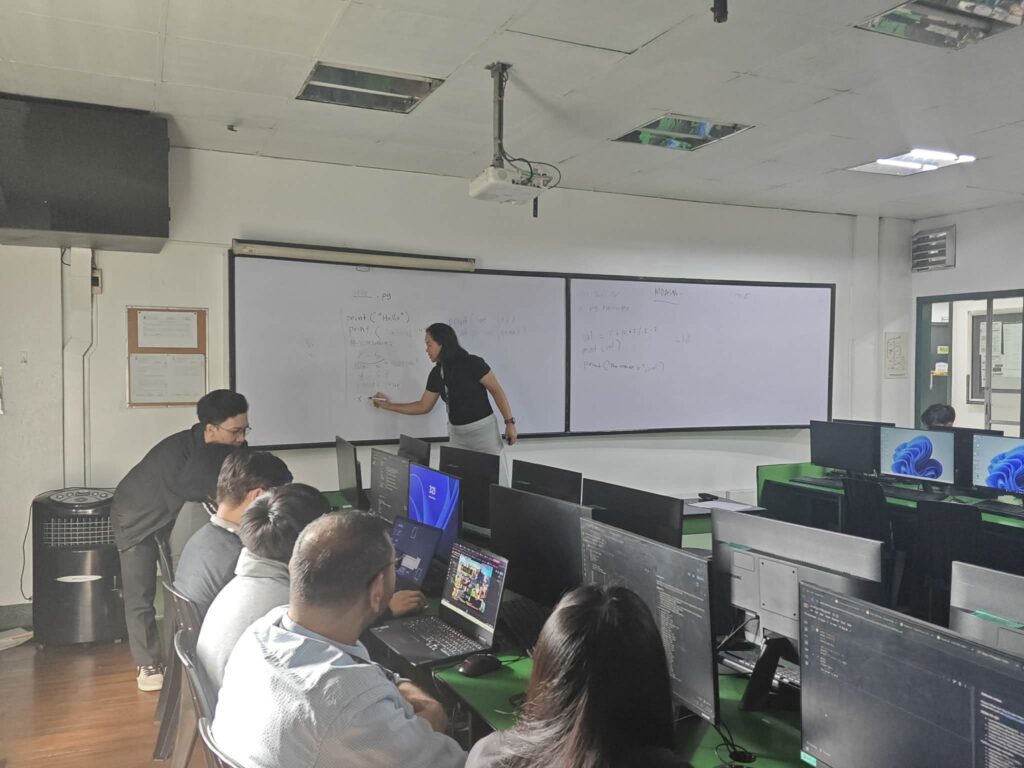
Hands-on activities enabled participants to apply the concepts discussed and gain experience in developing simple Python programs. This approach reinforced learning outcomes and provided faculty members with practical strategies for integrating Python into teaching and learning activities.
Sustainable Development Goals (SDG) Alignment
This activity supports Sustainable Development Goal (SDG) 4: Quality Education, particularly Target 4.4, which seeks to substantially increase the number of youth and adults with relevant technical and vocational skills for employment and decent work. By providing faculty members with accessible, hands-on Python training, the workshop contributes to Indicator 4.4.1, which measures the proportion of youth and adults with information and communications technology (ICT) skills. The initiative promotes digital literacy and strengthens institutional capacity to deliver quality, future-ready education.