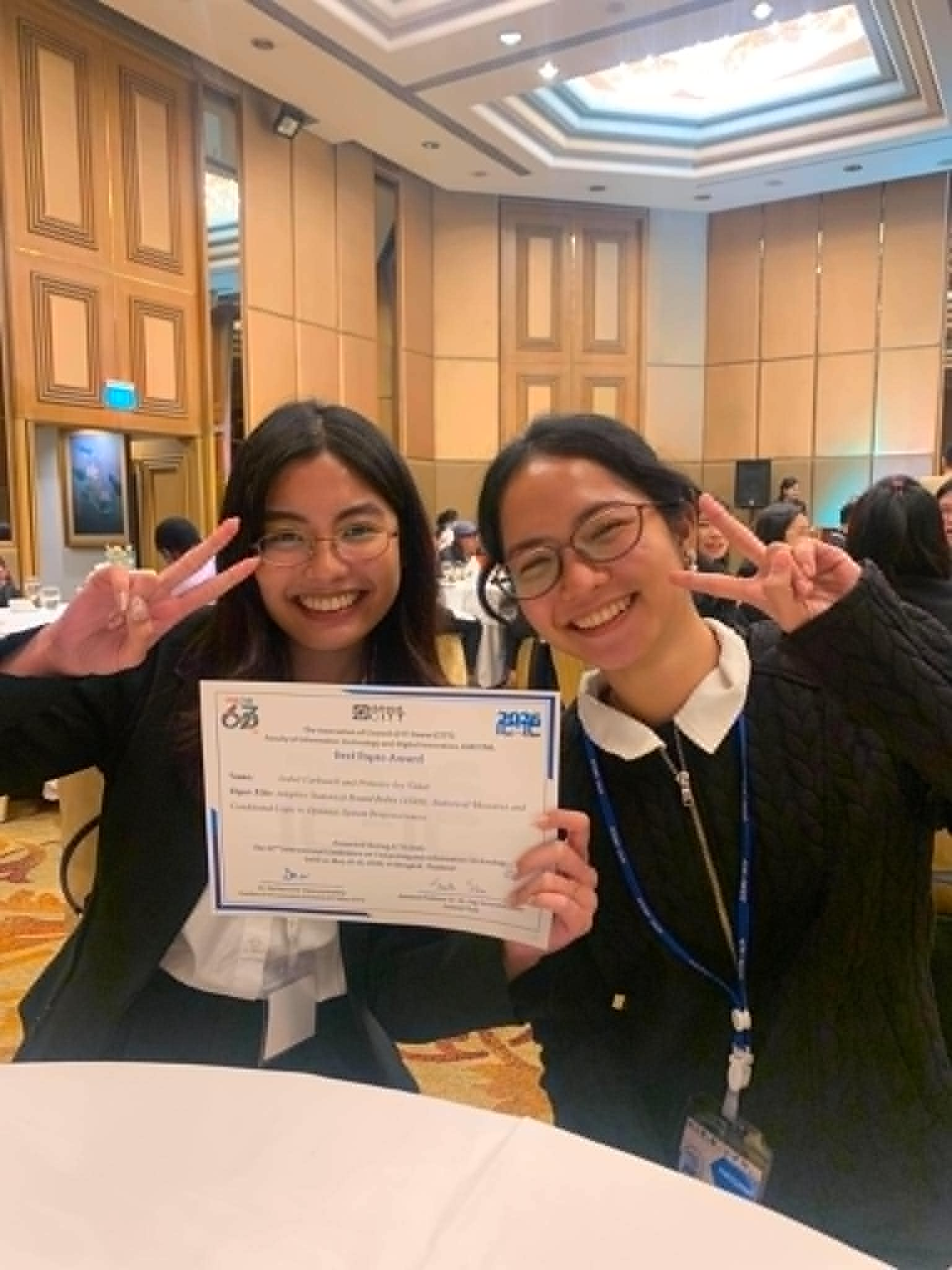
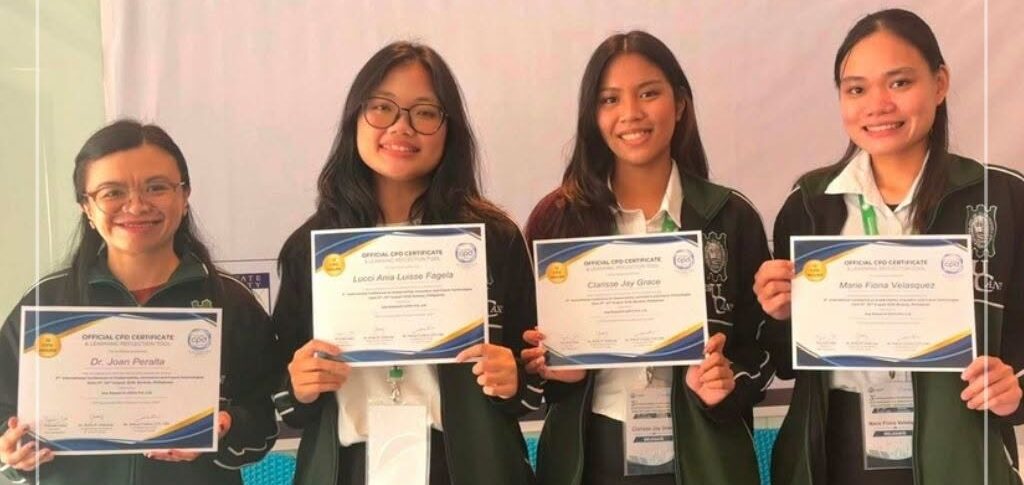
In the mountainous province of Benguet, where heavy rain can turn a slope into a hazard, three UC computer science students have shown how data and artificial intelligence can help communities prepare. CITCS students Lucci Ania Luisse Fagela, Clarisse Jay Grace, and Marie Fiona Velasquez, guided by their thesis adviser Dr. Joan Peralta, won Best Paper Presenter at the 3rd International Conference on Sustainability, Innovation, and Future Technologies (ICSIFT), held in Boracay on August 21 and 22, 2026.

Their study, “An XGBoost-XAI Model for Landslide Susceptibility Prediction Using Geospatial Data in Benguet Province,” applies Extreme Gradient Boosting (XGBoost) together with Explainable Artificial Intelligence (XAI) to predict which areas of Benguet are most prone to landslides. The research uses geospatial data to identify high-risk zones, and the explainable approach shows which terrain and environmental factors drive each prediction. This makes the results easier for planners, local governments and communities to understand and act on. The work supports disaster risk reduction and strengthens resilience and adaptive capacity to climate-related hazards.
The study was presented in Technical Session 3: Engineering and Innovative Technologies, where it was recognized for applying emerging technologies to environmental and disaster-related challenges. The presentation took place at a conference organized by ZEP Research together with ICSIFT and higher education institutions in the Philippines. The two-day event gave scholars, researchers and industry experts a venue for technology sharing, presenting and exchanging innovations in sustainability, emerging technologies and social innovation. For the UC students, it was a chance to share locally grounded research with an international audience.
For UC, the recognition shows undergraduate research that is aimed at problems the region actually faces. It also shows students building research capability and joining international scholarly collaboration.
SDG Alignment
- SDG 13 – Climate Action: The study strengthens resilience and adaptive capacity to climate-related hazards and natural disasters through data-driven landslide susceptibility prediction (Target 13.1).
- SDG 11 – Sustainable Cities and Communities: The research supports disaster risk reduction and the protection of vulnerable communities from losses caused by disasters (Target 11.5).
- SDG 9 – Industry, Innovation and Infrastructure: Student-led research in machine learning and geospatial analytics enhances scientific research and upgrades technological capabilities (Target 9.5).
- SDG 4 – Quality Education: Mentored thesis research gives students advanced technical skills in AI and data science, and an international platform to share them (Target 4.4).
- SDG 17 – Partnerships for the Goals: Presenting the research at an event organized with ZEP Research and ICSIFT promotes technology and knowledge sharing and multi-stakeholder partnerships in research and innovation (Targets 17.6 and 17.16).
Related post: