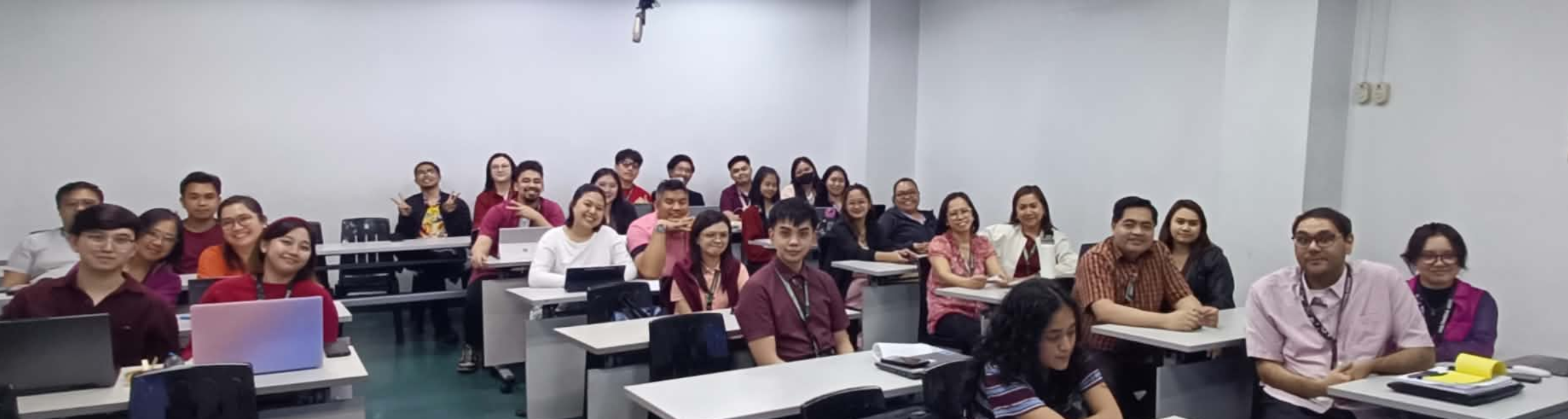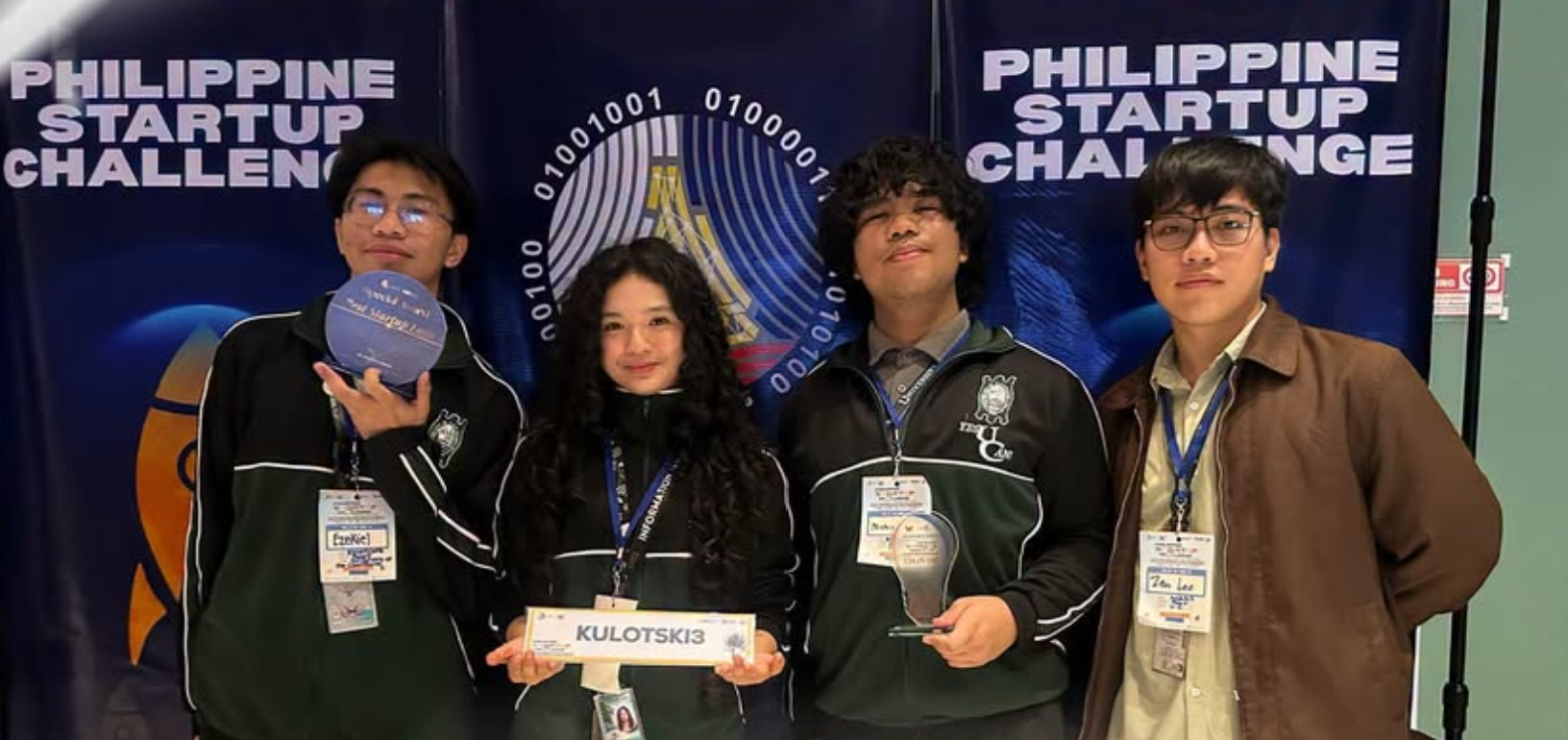
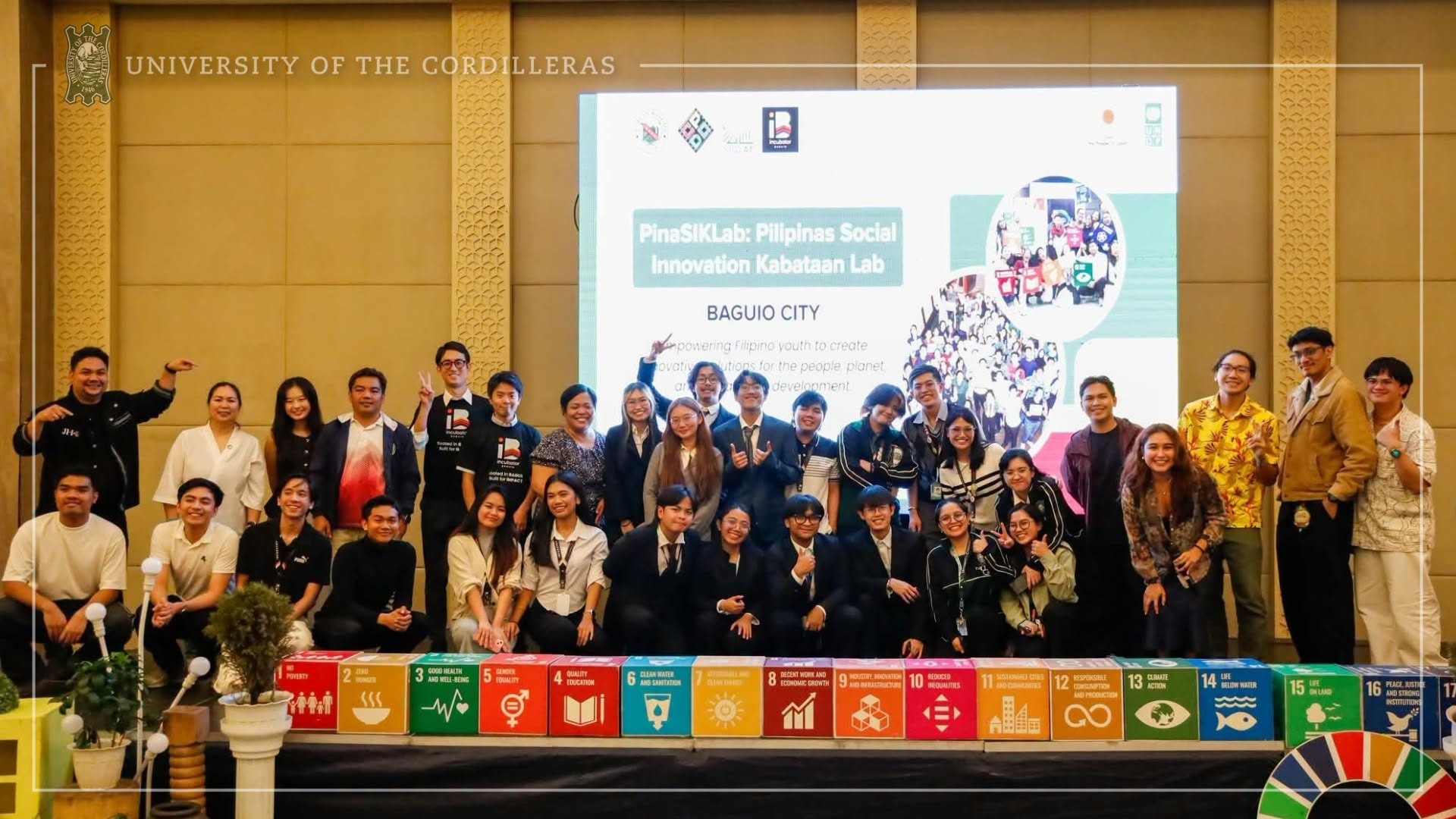
Water supply, school safety, and the future of local culture are not problems that only planners and officials can tackle. On October 30 – 31, 2026, student innovators from UC took these problems on at the PinaSIKlab: Pilipinas Social Innovation Kabataan Lab – Baguio City Cluster at Newtown Plaza Hotel. Two teams from the CITCS earned the Champion title and 5th place among 30 teams. A team from CCJE also placed 3rd, so UC student teams took three of the five winning places.

The champion, Team Rocket, comprises CITCS students, Ralvin Jay T. Magalong, Gemwil C. Salayog, Sophia I. Calosing, Eunice Pas D. Cueno, and Jsheanny Kate R. Ricafort. The team designed a nature-based system that collects rainwater in urban spaces and doubles as a waiting shed in parks, tourist spots, and other busy public areas. In a city where water supply and climate pressures are everyday concerns, the design turns an ordinary public structure into a source of usable water.
Team dev.eme, made up of CITCS students, Verah Janae Q. Dulay, Sherline M. Balla, William Marx S. Garcia, Leander Keith A. Calimlim, and Cherry Ann B. Doyaoen, took 5th place with a digital platform that gives local artists and culture greater visibility, a reminder that sustainable cities also protect their creative heritage.
PinaSIKlab is a mentoring and pre-incubation program of the United Nations Development Programme (UNDP) Philippines, and it is the Philippine component of a regional youth innovation project funded by the Government of Japan. It supports young innovators working on climate action, digital and AI solutions, and governance and social inclusion. The Baguio edition, the first city-level lab, was co-hosted by UNDP and the City Government of Baguio. It was organized locally with Incubator Baguio and SIGLAT Youth Innovation Hub, with support from the City Planning, Development and Sustainability Office. A total of 156 participants in 30 teams chose from six problem sets based on the city’s own development priorities. They traced the causes of their problems, spoke with the people affected, built early prototypes and used digital and AI tools to support, not replace, that community-centered work. The event closed with a showcase of all teams and a grand pitch by the Top 12, and the City Government of Baguio provided a PHP 120,000 grant for the young innovators.
For CITCS, the results show computing students applying their skills to real community needs. Through the lab, the students sharpened their abilities in innovation, teamwork, leadership and pitching, and learned from government, international and local innovation partners. The five winning teams will go on to the PinaSIKlab national challenge alongside innovators from the other host cities. The outcome reflects a university where students are given real problems to solve and where their ideas earn serious attention from partners outside the campus.
SDG Alignment
- SDG 6 – Clean Water and Sanitation: Team Rocket’s rainwater collection system supports sustainable water use and community participation in improving water management (Targets 6.4 and 6.b).
- SDG 11 – Sustainable Cities and Communities: The projects respond to local development priorities through participatory planning, safer and more inclusive public spaces, and the protection of local culture (Targets 11.3, 11.4 and 11.7).
- SDG 13 – Climate Action: A nature-based rainwater system and climate-focused problem sets build resilience and adaptive capacity to climate-related hazards (Target 13.1) and raise youth awareness and capacity for climate adaptation (Target 13.3).
- SDG 9 – Industry, Innovation and Infrastructure: Student teams used AI and digital tools to develop technology-driven solutions, encouraging innovation and involving more young people in research and development (Targets 9.5 and 9.b).
- SDG 8 – Decent Work and Economic Growth: The mentoring program promotes entrepreneurship, creativity and innovation among young people and helps them prepare for productive work (Targets 8.3 and 8.6).
- SDG 4 – Quality Education: The lab built relevant technical, entrepreneurial and problem-solving skills (Target 4.4)
- SDG 17 – Partnerships for the Goals: UC students worked within a partnership of UNDP, the Government of Japan, the City Government of Baguio, Incubator Baguio and SIGLAT Youth Innovation Hub, an example of multi-stakeholder partnerships (Targets 17.16 and 17.17).
Related posts: